Turning a Luxury Knitwear Brand into a High-Converting Online Store
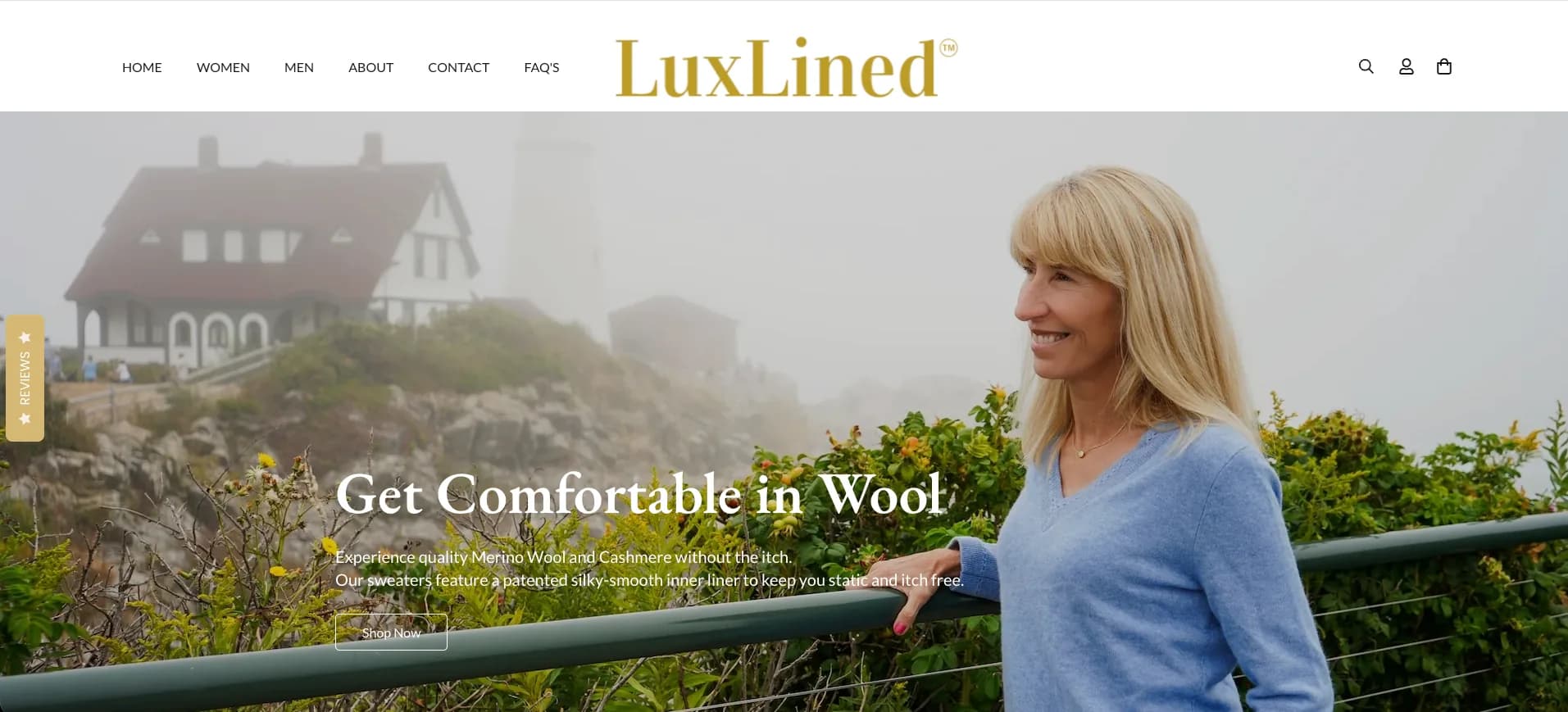
Why this project needed more than a nice-looking website
A premium Shopify e-commerce store for a US-based luxury knitwear brand selling Cashmere and Merino Wool sweaters. Designed a clean, high-end storefront with structured product collections, account management, cart functionality, and an early-access signup flow — delivering a refined shopping experience that reflects the brand's upmarket positioning. The brief sat in the luxury fashion e-commerce space, which meant the work had to balance brand trust, clear user journeys, fast loading pages, and obvious conversion paths rather than relying on decoration alone.
My focus was to turn the business goal into a practical digital system: structure the offer, remove friction from the visitor journey, and make the next step feel natural on mobile and desktop. The deliverables included custom shopify theme, product collection architecture, early-access waitlist flow, customer account portal, each chosen because it supported a real commercial outcome.
The final result gave LuxLined a stronger foundation for traffic, enquiries, and ongoing marketing. The clearest signal was 3.4× revenue growth in 90 days, backed by a cleaner page experience and a more focused conversion path.
The design work also had to respect how buyers behave in this niche. A visitor comparing luxury fashion e-commerce providers needs quick context, visible proof, low-friction navigation, and enough detail to understand why the business is credible before they click away. That shaped the page order, copy hierarchy, visual rhythm, and calls to action.
From a technical and SEO perspective, the project needed a structure that could be maintained after launch. Clean sections, descriptive headings, optimised imagery, mobile-first spacing, and internal pathways all help the site support future campaigns instead of becoming a one-time design asset.
This is also why the case study matters for future buyers. It shows how the visible interface, the content strategy, the technical build, and the business objective fit together. For LuxLined, the strongest decisions were the ones that reduced hesitation: clearer information, stronger proof points, easier navigation, and a more direct route from interest to action.
How and why we built it this way
The design challenge for LuxLined was communicating tactile quality through a screen. Cashmere and merino wool are products you want to touch — the website had to replace that sensory experience with visual language: editorial-style product photography layouts, generous white space, and a serif-forward typographic system that matched the premium positioning of the brand. Every image was treated as a hero element rather than a product thumbnail. The collection architecture was structured around material and occasion rather than generic category labels, guiding buyers through a discovery experience rather than a transactional grid. On the technical side, Shopify's checkout was configured for international buyers with US, UK, and AU shipping zones, and the early-access waitlist flow was built as a custom Shopify section with email capture connected to Klaviyo for automated pre-launch sequences. Load performance was a priority: all product images were compressed and served in WebP format, keeping the store under 1.2s on mobile despite the visual richness.
3.4×
Revenue growth in 90 days
41%
Cart abandonment reduction
0.9s
Page load time (down from 3.1s)
4.6×
Return on ad spend
LuxLined had a premium product — hand-crafted cashmere and merino wool sweaters — but no digital storefront to match. Their previous web presence was basic and failing to convey the brand's upmarket positioning, leading to lost sales and low consumer trust.
I built a bespoke Shopify storefront designed to feel as luxurious as the product itself. Every screen — from the homepage to the checkout — was crafted with premium typography, editorial photography layouts, structured collections, and an early-access waitlist flow. I also integrated customer account management and a streamlined cart experience.
Within 90 days of launch, online revenue tripled. The store became the brand's primary sales channel.
Deliverables
What does a Shopify e-commerce website cost in India?
A custom Shopify store for an Indian fashion or lifestyle brand typically runs ₹80,000–₹2,50,000 depending on the number of products, custom features, and integration requirements. A basic Shopify theme setup is cheaper; a fully custom design with bespoke sections, product filtering, and payment gateway integration takes more. Luxlined's build was in the mid-to-upper range due to the brand's premium positioning requirements.
How long does it take to launch a Shopify store?
A properly built custom Shopify store takes 4–8 weeks from brief to launch — 2 weeks for design, 2–3 weeks for development and product setup, and 1 week for testing and QA. Rushed timelines produce stores with conversion problems that cost more to fix than the time saved. For Luxlined, we took 6 weeks to ensure every product page and checkout flow performed correctly.
Can I manage my Shopify store myself after it's built?
Yes — Shopify is designed for non-technical management. After launch, adding products, updating prices, running discount codes, and managing orders are all straightforward in the admin panel. We provide a handoff session covering your specific store configuration and provide documentation for all custom features.
Do you integrate Indian payment gateways like Razorpay with Shopify?
Yes. Razorpay, PayU, Cashfree, and other Indian gateways all integrate natively with Shopify. We configure the payment gateway, set up currency handling, and test the checkout flow end-to-end before launch — including UPI, net banking, and card payment paths.
Want results like these
for your business?
Every project starts with a conversation. Tell me about what you're building.