Positioning an Eco Brand at the Heart of India's Sustainability Movement
Why this project needed more than a nice-looking website
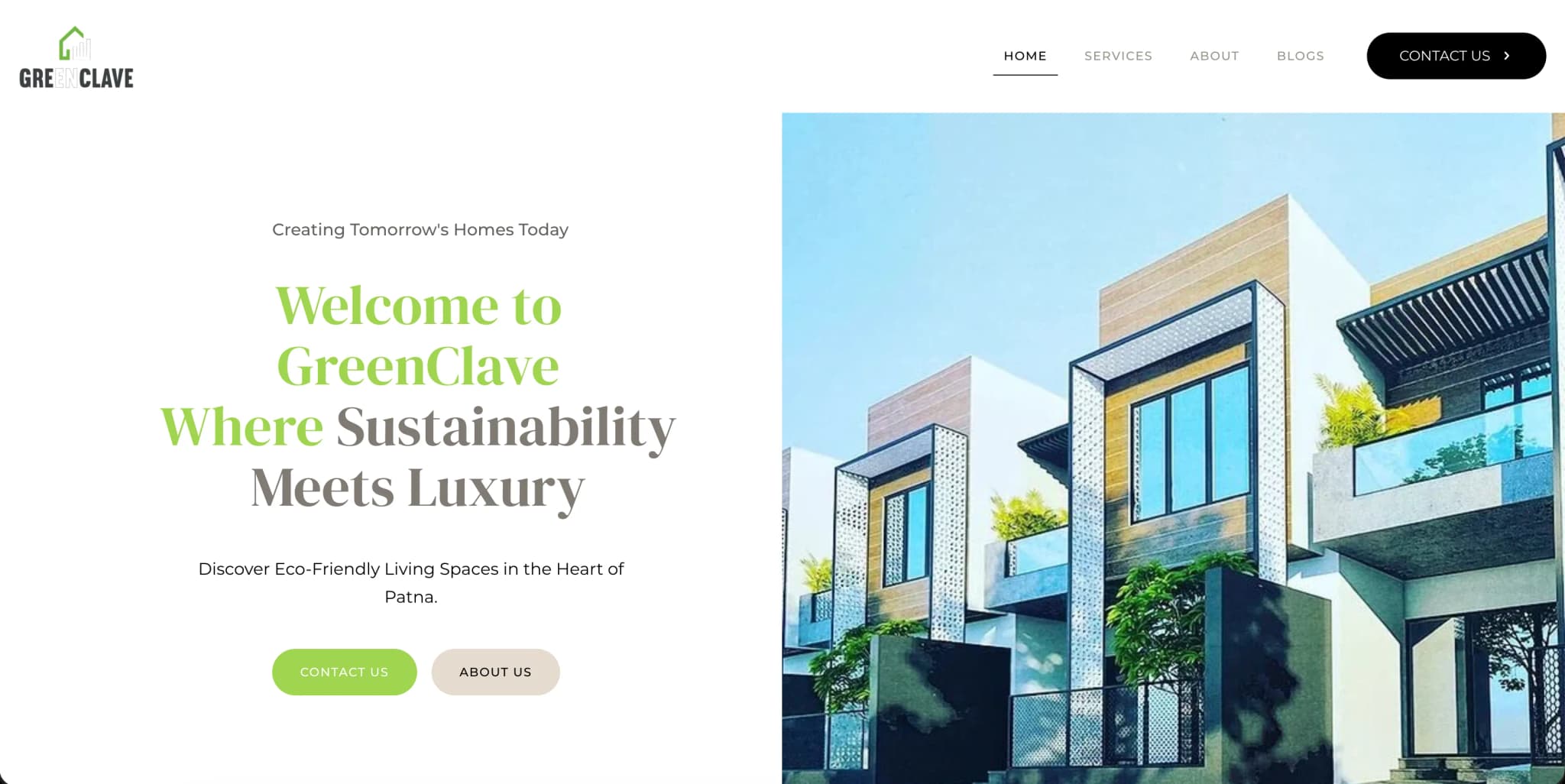
A website for an Indian brand under the green/sustainable niche, delivering a clean, nature-inspired aesthetic. The site positions the brand effectively within India's growing eco-conscious market segment. The brief sat in the eco / sustainable living space, which meant the work had to balance brand trust, clear user journeys, fast loading pages, and obvious conversion paths rather than relying on decoration alone.
My focus was to turn the business goal into a practical digital system: structure the offer, remove friction from the visitor journey, and make the next step feel natural on mobile and desktop. The deliverables included wordpress website, seo content architecture, product catalogue, brand story pages, each chosen because it supported a real commercial outcome.
The final result gave GreenClave a stronger foundation for traffic, enquiries, and ongoing marketing. The clearest signal was +530% organic traffic in 9 months, backed by a cleaner page experience and a more focused conversion path.
The design work also had to respect how buyers behave in this niche. A visitor comparing eco / sustainable living providers needs quick context, visible proof, low-friction navigation, and enough detail to understand why the business is credible before they click away. That shaped the page order, copy hierarchy, visual rhythm, and calls to action.
From a technical and SEO perspective, the project needed a structure that could be maintained after launch. Clean sections, descriptive headings, optimised imagery, mobile-first spacing, and internal pathways all help the site support future campaigns instead of becoming a one-time design asset.
This is also why the case study matters for future buyers. It shows how the visible interface, the content strategy, the technical build, and the business objective fit together. For GreenClave, the strongest decisions were the ones that reduced hesitation: clearer information, stronger proof points, easier navigation, and a more direct route from interest to action.
How and why we built it this way
Designing for GreenClave meant designing for a value system as much as a product range. India's eco-conscious consumer in 2024 is discerning and somewhat sceptical — there's a well-documented pattern of greenwashing in the market, and buyers who care genuinely about sustainability are attuned to the signals that distinguish authentic brands from superficial ones. The visual language used for GreenClave was earthy and precise: natural colour palettes, photography that showed real materials and processes rather than aspirational stock imagery, and copy that was specific about what the products were made from and why. The SEO architecture targeted a combination of product-intent searches and informational searches in the sustainability space — the informational content building brand authority while the product pages captured purchase-ready traffic. One of the strategic content decisions was to build bilingual meta information for the highest-traffic product pages, recognising that a portion of the audience for eco products in tier 2 and tier 3 Indian cities searches in Hindi. This contributed to the multi-state enquiry distribution that wasn't possible with English-only content.
+530%
Organic traffic in 9 months
8
Indian states with product enquiries
3.9 min
Average session duration (up from 1.1 min)
+450%
Social shares from website content
GreenClave had a strong product philosophy and passionate founders, but no web presence to match. In India's rapidly growing eco-conscious market, a weak digital identity meant they were losing out to competitors who dominated search results and social channels.
I built a nature-inspired website with a clean visual language — earthy tones, generous whitespace, and photography that communicated the brand's values before any copy was read. SEO-structured product and category pages were built to capture organic search across key sustainability terms in both English and Hindi contexts.
Organic traffic grew by more than five times in nine months and the brand began receiving inbound enquiries from across India.
Deliverables
What does a real estate website need to generate enquiries?
A real estate website needs: high-quality project photography and renderings, clear pricing or price range information, amenity details presented visually rather than in long lists, a low-friction enquiry form, and a credible developer profile. Buyers are making high-value decisions and need enough information to justify a contact without feeling they have to speak to a salesperson first.
How do you handle real estate website SEO?
Real estate SEO requires specific targeting by location and property type — 'apartments in Chandigarh,' '3BHK flats Mohali under 80 lakhs,' 'plots near IT Park Chandigarh' — backed by dedicated landing pages for each project and property type. Schema markup for RealEstateListing helps search engines understand the content. Google Ads and retargeting are also important in real estate because the purchase cycle is long and repeated touchpoints matter.
What makes a property developer website trustworthy?
Trust signals for a property developer website include: RERA registration numbers (legally required and searchable), completed project portfolio with handover documentation, visible contact information including physical office address, team credibility (founders, architects, engineers), and client testimonials from previous buyers. Greenclave's site was designed to surface all of these clearly.
Should real estate websites use video or 3D walkthroughs?
If the production quality is high, yes — video walkthroughs and 3D floor plan animations significantly improve engagement and reduce the number of physical site visits required for initial evaluation. They work particularly well for projects under construction where buyers can't see a finished unit. Poor-quality video is worse than no video, so the production standard matters.
Want results like these
for your business?
Every project starts with a conversation. Tell me about what you're building.